The Accidental Theorist and Other Dispatches From the Dismal Science by Paul Krugman
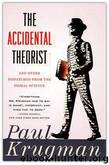
Author:Paul Krugman
Language: eng
Format: mobi
Tags: Literary Collections, Theory, Conferencias, Ensayos, TeoríAs, Economics, EconomíA, General, Etc, Economic Conditions, Political Science, Economía Del Bienestar, Economic Policy, Public Policy, Fiction, Essays, Business & Economics
ISBN: 9780393318876
Publisher: Norton
Published: 1998-01-02T05:00:00+00:00
A Good Word for Inflation
Many years ago, Paul Samuelson memorably cautioned against basing economic policy on “shibboleths,” by which he meant slogans that take the place of hard thinking. Strictly speaking, this was an incorrect use of the word: The OED defines a shibboleth as “A catchword or formula adopted by a party or sect, by which their adherents or followers may be discerned, or those not their followers may be excluded.” But in a deeper sense Samuelson probably had it right: Simplistic ideas in economics often become badges of identity for groups of like-minded people, who repeat certain phrases to each other, and eventually mistake repetition for self-evident truth.
Excerpted from “Fast Growth and Stable Prices: Just Say No,” Economist, August 1996.
Public discussion of monetary policy is increasingly dominated by two such sects. The shibboleth of one sect is “growth” that of the other is “stable prices.” Those who belong to neither sect find it hard to get a hearing; indeed, journalists and politicians often seem baffled by economists who do not fit into these categories. Surely you must believe either that central banks should aim for zero inflation to the exclusion of all other goals (and that stable prices will bring huge economic benefits) or that central banks should stop worrying about inflation altogether and go for growth (and that by so doing they can bring back the growth rates of the 1960s).
But we need not make this choice. We can and should reject both fatuous promises of easy growth and mystical faith in the virtues of stable prices.
“Four Percent Follies” made the case against growth; so let me make myself even more unpopular, by making the case against stable prices.
The Economic Growth and Stability Act, proposed in 1995 by Senator Connie Mack, declares that price stability “is a key condition to maintaining the highest possible levels of productivity, real incomes, living standards, employment and global competititiveness,” and enjoins the Federal Reserve to make such stability its primary goal. It’s a confident declaration: You would never guess that there is hardly any reason to believe that it is true.
The fact, however, is that the costs of inflation at the low single-digit rates that now prevail in advanced countries have proved theoretically and empirically elusive. Very high inflation, which leads people into costly efforts to avoid holding cash, is one thing; but we are not remotely in that situation. Moreover, it is fairly certain that the costs of inflation, such as they are, are nonlinear in the actual rate: 3 percent inflation does much less than one-third as much harm as 9 percent.
Still, even if the gains from price stability are nowhere near as large as Senator Mack imagines, why not go for them? Because to do so would be very expensive. The great disinflation of the 1980s, which brought inflation rates down from around 10 percent to around 4, was achieved only through a prolonged period of high unemployment rates and excess capacity—in the United States, the unemployment rate
Download
This site does not store any files on its server. We only index and link to content provided by other sites. Please contact the content providers to delete copyright contents if any and email us, we'll remove relevant links or contents immediately.
International Integration of the Brazilian Economy by Elias C. Grivoyannis(111078)
The Radium Girls by Kate Moore(12036)
Turbulence by E. J. Noyes(8057)
Nudge - Improving Decisions about Health, Wealth, and Happiness by Thaler Sunstein(7712)
The Black Swan by Nassim Nicholas Taleb(7137)
Rich Dad Poor Dad by Robert T. Kiyosaki(6646)
Pioneering Portfolio Management by David F. Swensen(6305)
Man-made Catastrophes and Risk Information Concealment by Dmitry Chernov & Didier Sornette(6028)
Zero to One by Peter Thiel(5808)
Secrecy World by Jake Bernstein(4756)
Millionaire: The Philanderer, Gambler, and Duelist Who Invented Modern Finance by Janet Gleeson(4482)
The Age of Surveillance Capitalism by Shoshana Zuboff(4310)
Skin in the Game by Nassim Nicholas Taleb(4257)
The Money Culture by Michael Lewis(4212)
Bullshit Jobs by David Graeber(4197)
Skin in the Game: Hidden Asymmetries in Daily Life by Nassim Nicholas Taleb(4012)
The Dhandho Investor by Mohnish Pabrai(3775)
The Wisdom of Finance by Mihir Desai(3754)
Blockchain Basics by Daniel Drescher(3586)
